

Plundering the Egyptians
Why Epic Poetry and Greek Drama Still Belong in a Christian Curriculum — Introducing the Summer 2026 issue of The Consortium: A Journal of Classical Christian Education

The Consortium is a journal of Classical Christian Education, published semiannually (Summer and Winter). You can read digital versions of past issues and purchase print versions using these buttons.
Our final Consortium Conference of the season is the Southeastern Consortium in Raleigh, NC. Use the link to get details and register.

Our next issue of The Consortium Journal takes up the role of epic poetry and Greek drama in classical Christian education. These particular expressions of imaginative literature are the bedrock of Western literary forms. Outside of the Scriptures, they have arguably exerted the majority of influence over Western literature; therefore, they have played a momentous role in shaping Western culture. Such being the case, it is the contention of classical Christian educators that epic poetry and drama, alongside all of the arts, have significant capacity to convey truth, provide examples of goodness (or viciousness to be eschewed), and furnish the moral imagination with illustrations of beauty.
Although each genre possesses its own particular set of conventions, they also share important commonalities, both in their form, and in that they are fundamentally humanizing. Even for Christians who, on obvious theological grounds, reject Paganism as orthodox religious belief, such works are worthy of our sustained attention and worthy of a place in the curriculum of our Christian schools. Let us first consider the forms before we examine their humanizing attributes.
Epic Poetry
In his landmark work, Poetics, Aristotle claims that epic poetry and tragedy resemble each other in that they are both imitations of serious subjects set in meter. They differ, however, in that epic is narrative and longer, without a fixed time limit, where tragedy endeavors to keep its actions limited to a single circuit of the sun, or thereabouts. Given they share some constituent features and not others, Aristotle notes that “All the parts of an epic are included in a tragedy; but those of tragedy, are not all of them to be found in the epic.” Thus a good judge of the goodness or badness of a tragedy will be a good judge of an epic as well.
An epic is a long narrative poem, written in an elevated style, that follows a hero through a series of episodic adventures which form an organic whole. Aristotle traces the roots of poetry back to two natural causes, “each of them part of human nature.” The first is man’s desire to learn and his natural proclivity to learn through imitation—“he is the most imitative creature in the world, and learns at first by imitation.” And just as it is natural for all men to delight in works of imitation, says Aristotle, natural also is his “sense of harmony and rhythm.” It’s from these natural aptitudes and gradual improvements upon their first attempts, man “created poetry out of their improvisations.” Poetry then broke up into two kinds according to the character of the poets themselves: the more noble created epic and the more trivial created satire, the forbearer of comedy. Aristotle explains,
Poetry, however, soon broke up into two kinds according to the differences of character in the individual poets; for the graver among them would represent noble actions, and those of noble personages; and the meaner sort the actions of the ignoble. The latter class produced invectives at first, just as others did hymns and panegyrics. We know of no such poem by any of the pre-Homeric poets, though there were probably many such writers among them.
Writing in the fourth century B. C., he acknowledges the likelihood of poets who preceded Homer, although no manuscripts were known to them at that time. However, if it is acceptable to expand the geographical scope beyond the immediate Mediterranean region, a late discovery (1853 A.D.) of the Epic of Gilgamesh in the ruins of a seventh century library in Nineveh confirms Aristotle’s assumption.
Prior to Homer collating and writing his epics in the late eighth century B. C., various iterations of the episodic stories were compiled (i.e., stitched together) into a single narrative and sung at festivals by an Aoidos (a bard) using a lyre to keep the meter. The stories were passed down orally and circulated this way for centuries. Following Homer’s written work, especially during the Classical Age, the lyre was dropped and the epic was performed at public festivals by a Rhapsode via dramatic, memorized recitations while keeping time by tapping with his staff. These festivals often lasted several days (see Plato’s Ion).
Some specific characteristics particular to epic poetry include: characters of significant ethnic or national import, a vast setting for the story to unfold, deeds of great valor which require superhuman courage, the involvement of supernatural or divine forces (i.e., the gods), and an objective and elevated style of storytelling. Also, the epic poet generally employs many or all of the following devices: a clearly stated theme in the introduction, an invocation of a muse, a story that begins in medias res, the cataloging of important people or items, and the frequent use of epic similes. In the West, five memorial epics include Homer’s The Iliad and The Odyssey, Vergil’s Aeneid, Dante’s Divine Comedy, and Milton’s Paradise Lost.
Looking for curriculum that explores epic poetry and Greek Drama? Kepler offers live, online courses with qualified classical Christian teachers delivered using the Oxford model (flipped classroom).
Greek Drama (with an Emphasis on Tragedy)
Whereas epic poetry was sung by a rhapsode at festivals, drama is a story that is acted out in a specific manner on a stage. Aristotle famously defines drama—more specifically the form of drama called tragedy—“as the imitation of an (human) action that is serious and also, as having magnitude, complete in itself.” Expanding on and clarifying Aristotle’s meaning, J. M. Manly observed three necessary elements in drama: 1) a story, 2) told in action, 3) by actors who impersonate the characters. Although Manly’s definition as it stands might also include Pantomime, most literary scholars hold to the position that dialogue must be present for the work to properly belong to drama.
Drama arose from the Greeks’ Dionysian religious ceremonies, likely from the choral songs chanted in honor of the god. The form of drama categorized as comedy derives from the Dionysian fertility rites, while the form categorized as tragedy derives from the Dionysian mortality rites. (Of passing interest is the medieval drama, which appears to have arisen independently out of the Christian rites commemorating the birth, death, and resurrection of Christ.) Similar to epic poetry, drama bifurcated into two trajectories with drama taking up magnitude and shifting from the dithyramb and use of trochaic meter to the iambic speaking meter, while comedy took up the ridiculous and invoked laughter. Only later did comedy frame stories and develop plots. Episodic dramatizations in tragedy gradually developed when an actor would step from the chorus and give his lines independently. Aeschylus took the practice a step further when he added a second actor and “curtailed the business of the Chorus,” while Sophocles eventually added a third actor, as well as scenery, to the stage.
For as much as the word comedy is based on the Greek word for “revel”—actor’s costumes preserved from the early Greek comedy display evidences of ancient phallic ceremonies—the word tragedy seems to mean “goat-song”—Greek tragos (goat) + ōidē (song). There is some speculation about this etymological curiosity, but one theory has to do with the winner of the dramatic competitions during the Dionysian festivals being awarded a goat. In Ars Poetica, Horace writes,
The writer who vied for the paltry prize of a goat
With tragic song, soon bared shaggy satyrs to view
On the stage, coarsely probing for laughs without losing dignity -
Some pleasant device and novel attraction like this
Being all that could make the spectator stay on and watch
After having fulfilled the ritual rites of the occasion,
And drunk a good bit, and been freed from the normal restraints.
Another theory is that the chorus singers were satyrs dressed in goat-skins but both of these are mostly educated speculations. Louis Markos, whose essay, “Uniting the Trivium and Quadrivium,” graces the first issue of this journal, suggests a third theory, “a deeper origin for the word tragedy: not ‘goat song,’ but ‘song of the scapegoat.’” In his book, Achilles to Christ, he carefully compares and contrasts the rituals and sacrifices of the Jewish Day of Atonement and the Athenian Dionysia, arguing for a potential correlation in the way both people groups sought to uncover “some hidden taboo sin, a stain or curse with the power to drag down a hero, a heroine or an entire household.” He writes,
Like the children of Israel, the citizens of Athens were keenly aware that the breaking of taboos would bring down retribution on both the individual and the polis, and that to avert such a disaster, the divine wrath had to be diverted onto a surrogate. The Athenians, being ignorant of God’s revelation to Moses on Mount Sinai, understood neither that God was One nor that he was holy, and as such they did not recognize sin as that which violates the nature of a holy God. But they certainly did have an inchoate (and, I would add, essential) sense that even if Zeus and his fellow Olympians were imperfect, a divine order of right and wrong existed and could not be trampled upon without impunity…Indeed as the bread and wine of Demeter and Dionysus are a pagan seed that finds its ultimate consummation in the Eucharist (or Lord’s Supper), so the tragic song of the scapegoat is an additional seed that finds its consummations in the crucified Savior whose death brought atonement to the world.
Perhaps Markos’ case will not be convincing to everyone, but his claim is compelling for another reason. His interpretation suggests, along with C. S. Lewis, that Christians and Pagans had much more in common with each other than either has with a post-Christian in the modern era. At least three implications emerge from this shared commonality. First, there is an intrinsic impulse for worship in human nature, an impulse that includes the appeasement of the Divine and the eradication of hamartia from both the individual and the community. Second, there is an intrinsic impulse in human nature to sub-create (i.e., to myth-make, to frame stories)—as Aristotle tells it, from the natural desire to learn from imitation. Third, it implies—from a strictly Christian perspective—that all truth is God’s truth.
To be clear, the previous excerpt, when read in the context of Markos’s larger argument, does not suggest he is arguing for the same kind of theological continuity between Pagan and Christian rites as one would expect to exist between Jewish and Christian rites (e.g., circumcision and baptism or Passover and Eucharist). Markos is arguing there is a humane correlation that exists in both Paganism and Christianity similar to the Apostle Paul’s assertions in Acts 17 (i.e, Pagans groped toward God vs. Christ descended to man). C. S. Lewis makes this argument in an essay titled, “De Descriptione Temporum,” where he explains:
Christians and Pagans had much more in common with each other than either has with a post-Christian. The gap between those who worship different gods is not so wide as that between those who worship and those who do not. The Pagan and Christian ages alike are ages of what Pausanias would call the δρώμενον, the externalised and enacted idea; the sacrifice, the games, the triumph, the ritual drama, the Mass, the tournament, the masque, the pageant, the epithalamium, and with them ritual and symbolic costumes, trabea and laticlave, crown of wild olive, royal crown, coronet, judge’s robes, knight’s spurs, herald’s tabard, coat-armour, priestly vestment, religious habit-for every rank, trade, or occasion its visible sign. But even if we look away from that into the temper of men’s minds, I seem to see the same.
The fact that both ancient pagans and Christians worshiped—even if the object of Pagan worship was in error—and shared similarities in worship rituals, reveals the deeply embedded knowledge of the Divine and the Divine Law written on the human heart. The Apostle Paul highlights this in his letter to the Romans: “For when Gentiles, who do not have the law, by nature do what the law requires, they are a law to themselves, even though they do not have the law. They show that the work of the law is written on their hearts, while their conscience also bears witness, and their conflicting thoughts accuse or even excuse them” (Romans 2:14–15, ESV).
Next, drawing from Aristotle’s explanation of the development of epic and drama—from man’s natural desire to learn from imitation—and Markos’s explication of the commonalities that exist in Pagan and Jewish ritual, one recognizes an intrinsic impulse in human nature to myth-make. Later in his Poetics, Aristotle explains this as man’s philosophical impulse: to explore what human beings “will probably or necessarily say or do.” He writes,
From what we have said it will be seen that the poet’s function is to describe, not the thing that has happened, but a kind of thing that might happen, i.e. what is possible as being probable or necessary. The distinction between historical and poet is not in the one writing prose and the other verse—you might put the work of Herodotus into verse, and it would still be a species of history; it consists really in this, that the one describes the thing that has been, and the other a kind of thing that might be. Hence poetry is something more philosophic and of graver import than history.
Although we might contend with some minor aspects of Aristotle’s perspective (e.g., his disregard for the philosophical nature of history), educators in the West have long acknowledged the philosophical value of imaginative literature (i.e., poetry) in forming a civilization’s moral imagination: lectio transit in mores.
Mythopoeia
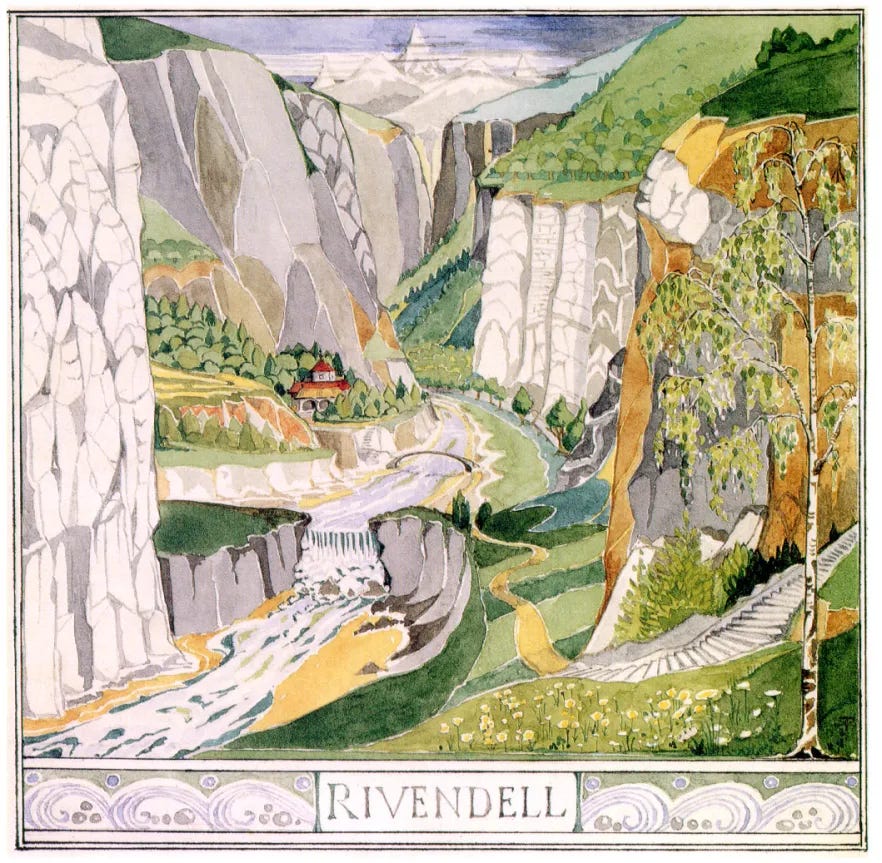
Perhaps the most famous expression of this particular theological aesthetic given in the modern world comes from J. R. R. Tolkien’s poetic response to the claim of the pre-Christian C. S. Lewis, namely that myths, however beautiful, are “lies breathed through silver.” In his Mythopoeia, Tolkien puts for his aesthetic:
The heart of man is not compound of lies,
but draws some wisdom from the only Wise,
and still recalls him. Though now long estranged,
man is not wholly lost nor wholly changed.
Dis-graced he may be, yet is not dethroned,
and keeps the rags of lordship one he owned,
his world-dominion by creative act:
not his to worship the great Artefact.
man, sub-creator, the refracted light
through whom is splintered from a single White
to many hues, and endlessly combined
in living shapes that move from mind to mind.
Though all the crannies of the world we filled
with elves and goblins, though we dared to build
gods and their houses out of dark and light,
and sow the seed of dragons, ‘twas our right
(used or misused). The right has not decayed.
We make still by the law in which were made.
Tolkien asserts that even fallen human imagination retains some recollection of its origin. Man’s heart “draws some wisdom from the only Wise.” Yes, it is true that humanity is estranged from God, and doubly so for idol-worshiping Pagans, but human nature was not transmogrified because of the fall. Tolkien further claims although mankind may have lost grace (dis-graced), he did not lose his kingship (not dethroned). In other words, the Fall diminished mankind’s state and condition, but it did not change him into something other than human and it did not annul his kingly office. Humanity’s dominion mandate is still intact; thus, we are not to worship creation; we are to exercise our dominion over it through sub-creating.
Tolkien also affirms that God is the true source of all being and unity (i.e., a “single White”). But man is a “sub-creator.” He then compares sub-creating mankind to a prism. Man has no capacity to generate light—to create ex nihilo—but he does have the capacity to splinter the single White into “many hues,” which then move, “in living shapes,” “from mind to mind.” That is, humans have the innate capacity and inclination to create myths, epics, dramas (i.e., stories in secondary worlds) that are to be passed down, shared, and inherited. Man’s ability to sub-create is a gift from God given through common grace. As a sub-creator, man creates genuinely, but derivatively. He creates by means of the same creative law by which he himself was created. Said another way, we make (poiema) because “making” was written into the law of our own making (Ephesians 2:10).
Tolkien is, lastly, under no delusion that all of Man’s sub-creative acts are automatically virtuous. Human storytelling can be exercised well or exercised poorly. He can tell good stories or bent stories. This common grace can be used or misused, but the human right to create “has not decayed.” Thus, the capacity and legitimacy of sub-creative activity survives every corrupted instance of it. In sum, sub-creation is not a rebellion against the Truth; nor is a counterfeit of it. It is an inevitability of being made in the image of The Maker. To stop making would be, in some sense, a truer betrayal of human nature than any myth could ever be.
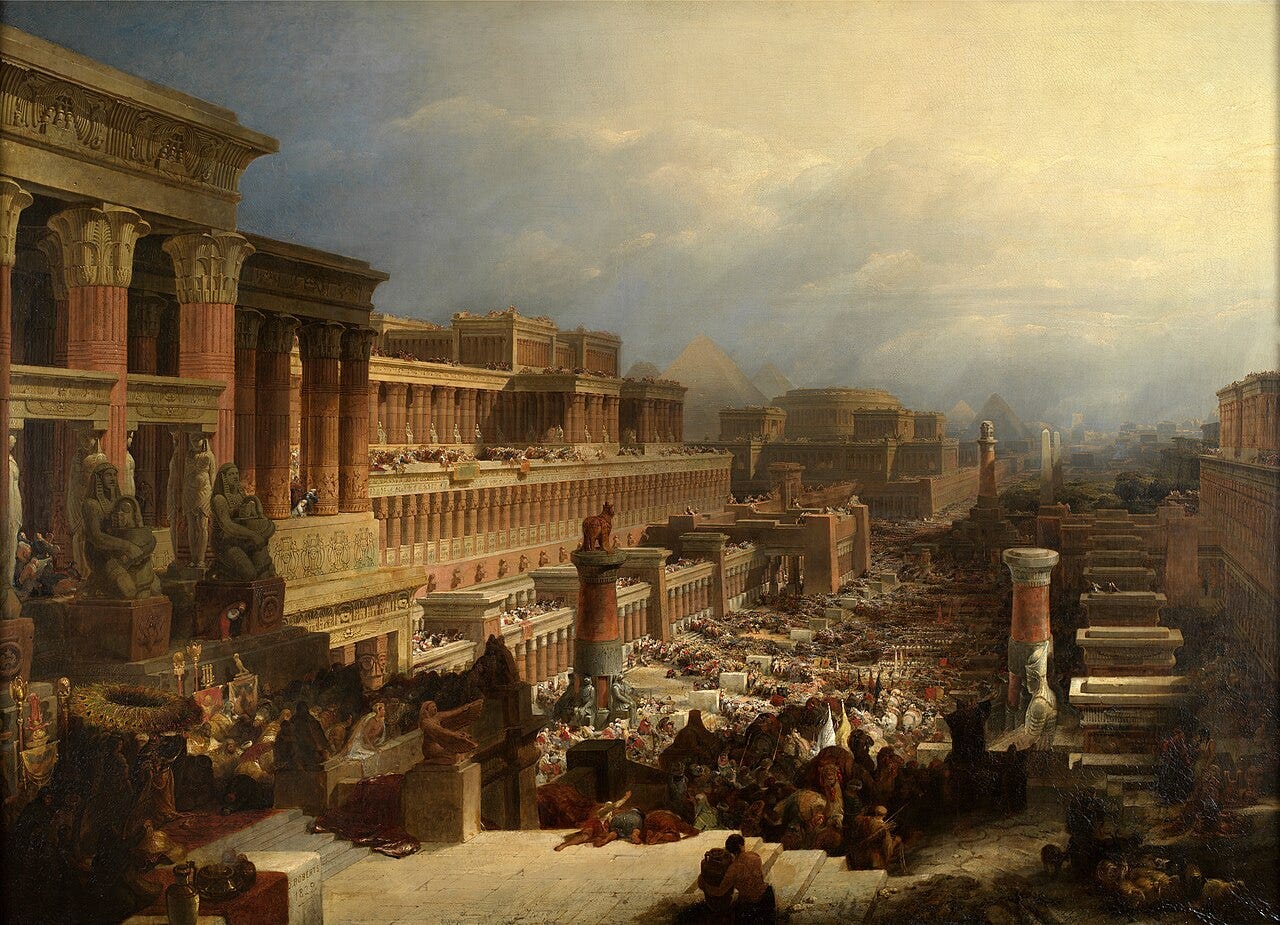
The third implication to emerge from the shared commonality of Pagan and Judeo-Christian humanness is the value of splintered light in our Western texts, even Pagan works. Most are aware of Tertullian’s incredulity about the relationship between Athens and Jerusalem, asking what the former has to do with the latter. Even Jerome concurred with Tertullian’s scorn for anything but what he saw as pure Christianity. While classical Christian educators generally seek nothing less than pure Christianity, we reject the false dichotomy embedded in Turtullian’s question. Without rejecting Christianity or elevating ancient Pagan wisdom to the level of Scripture, we hold, with St. Augustine, that all truth is God’s truth, regardless of where it is sourced. In De Doctrina Christiana, the Bishop of Hippo eloquently mandates Christians to claim truth dug up by the Pagans. He writes,
Any statements by those who are called philosophers, especially the Platonists, which happen to be true and consistent with our faith should not cause alarm, but be claimed for our own use, as it were from owners who have no right to them. Like the treasures of the ancient Egyptians…These treasures—like the silver and gold, which they did not create but dug, as it were, from the mines of providence, which is everywhere—which were used wickedly and harmfully in the service of demons must be removed by Christians, as they separate themselves in spirit from the wretched company of pagans, and applied to their true function, that of preaching the gospel.
Classical Christian education abides in the realm of Christian humanism which affirms with Saint Basil there is in Pagan literature honey to be taken from the bees and blooms to be snatched from thorny rose bushes. And, we believe with Erasmus and other notable Christian educators in the Christian humanist tradition who believe “Everything in the Pagan world that was valiantly done, brilliantly said, ingeniously thought, diligently transmitted, had been prepared by Christ for his society.” Thus, the making of epic and drama demonstrates the human capacity to make (poiema) is not fundamentally corrupt. There are certainly things in it to be discounted and discarded (e.g., bee stings and rose thorns). But as Leland Ryken notes, by reading epics and drama, Christian teachers and students are viewing and relating these cultural artifacts to their Christian worldview—in essence, they are relating their faith to the culture.
Essay Abstracts
The authors in this issue of The Consortium provide readers with thoughtful insights and unique perspectives on the epic poetry and Greek drama of which we have been considering. In the first essay, “The Quest for the Well-Lived Life: A Classical, Liberal Arts Approach Through Epic Poetry,” Karla M. Memmott treats of the question Michael presents to Adam: what it means to live well, however long or short the days Heaven permits. Her literary scythe cuts wide, bringing into conversation The Book of Job, Homer’s Iliad and Odyssey, and Paul Kingsnorth’s Against the Machine to commend the classical liberal arts as the vehicle for carrying the answer to this perennial question across multiple generations.
In the second essay, David Givens argues for an epic reading of Luke’s gospel. His essay titled, “The Pauliad: Acts as the Development of Christian Heroism,” suggests modern scholarship has largely overlooked Luke’s deliberate attempt to model his gospel’s form on the most notable epic of his day, Vergil’s Aeneid. Paul, according to Givens, is a Greco-Roman hero whose quest is an inversion of the notable Pagan pattern. Paul pursues Christ’s glory, not his own; and he takes dominion through surrender, not through conquest.
In the third essay, Drew Mery makes the claim that happiness is found within sorrow. Titled, “Happy Tragedy: How Tragedy Amplifies the Happy Life in the Greek Tragedies and the Bible,” Mery brings together stories from both the Pagans and from Scripture to show that happiness endures within one’s sorrow through a life well lived. But the essay’s greatest contribution is its demonstration of Tolkien’s concept of eucatastrophe in the life of Joseph—who is a type and foreshadow of the crucified and risen Christ—and in the life of Christ himself, who is for the Church, the ultimate model of hope and happiness in suffering and sorrow.
The fourth and fifth essays both treat of Dante’s The Divine Comedy. In the fourth essay titled, “Reformation Shadows in Dante’s Purgatorio,” Jessica Clark traces Dante’s debt to the early Church fathers while simultaneously and boldly commending a Reformational reading of The Divine Comedy, a reading which denies the existence of a real Purgatory and affirms salvation is sola gratia. Tracy Leary, also taking up Dante in the fifth essay titled, “Playing at Teaching: Dante’s Solarian Cantos and Thomistic Leisure,” takes a philosophical and pedagogical look at Dante’s Comedy. Drawing upon Giuseppe Mazzotta’s ludic theology, as well as a host of additional supportive Christian scholarship, she argues that play is contemplation; and the most meaningful approach to teaching is both active and contemplative. The teacher, therefore, is at her best when she contemplates truth, and lovingly and actively, brings the students into communion through play.
Bringing the lot to a close is Bryant K. Owens’s essay, “Free and Able: Right Reason in Milton’s Paradise Lost.” Owens takes up “right reason” and traces it from the Pre-Socratics to the Cambridge Platonists to demonstrate that orthos logos is the foundation for Milton’s moral architecture in Paradise Lost. He then presents a fresh look at the lessons of right reason in Milton’s epic and demonstrates that Paradise Lost can be a fruitful literary work for exploring right reason as a gift from God. Ultimately, Owens’ work wraps up this issue by contending that the work of restoring what was lost in Paradise is going to be hard work, but the labor to renew right reason in agreement with God’s created order, with the aid of the Spirit of Christ, is worth the sacrifice and labor.
On behalf of the editorial committee, I commend this summer 2026 issue of The Consortium: A Journal of Classical Christian Education to you in the hope it will not only serve your vocation of helping the next generation pursue wisdom and virtue as they rightly order their loves, but also lead you, personally, further up and further in your pursuit of the Good, the True, and the Beautiful.